 Saudi Arabia
 United Arab Emirates
 Qatar
 Kuwait
 Oman
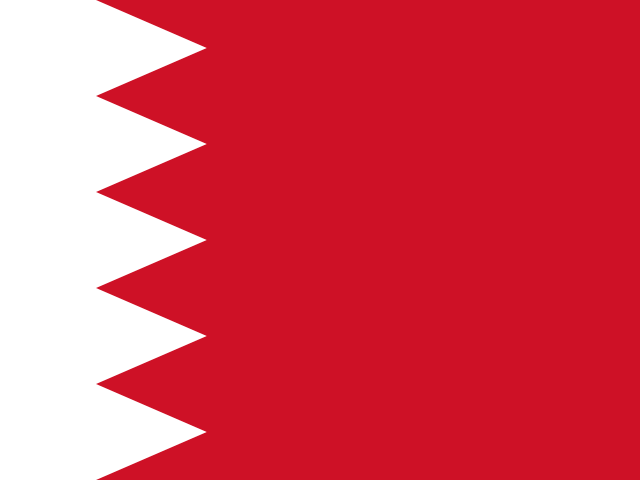 Bahrain
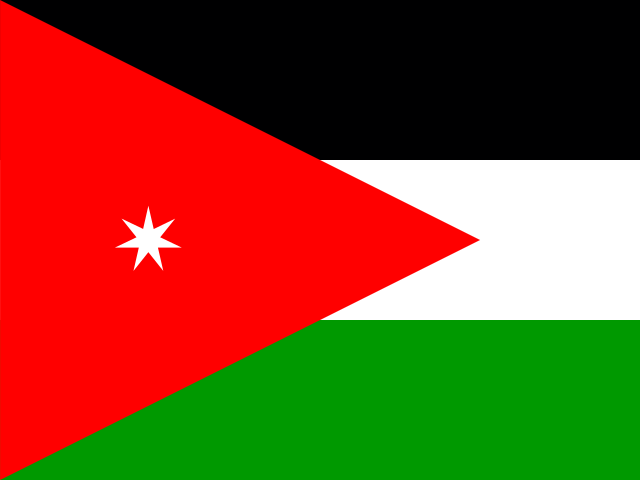 Jordan
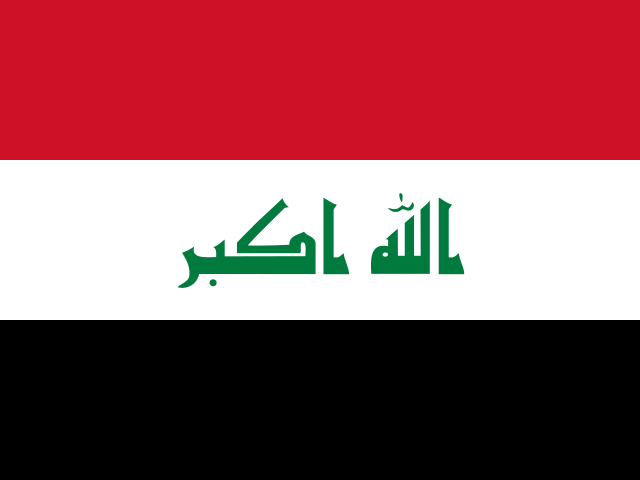 Iraq
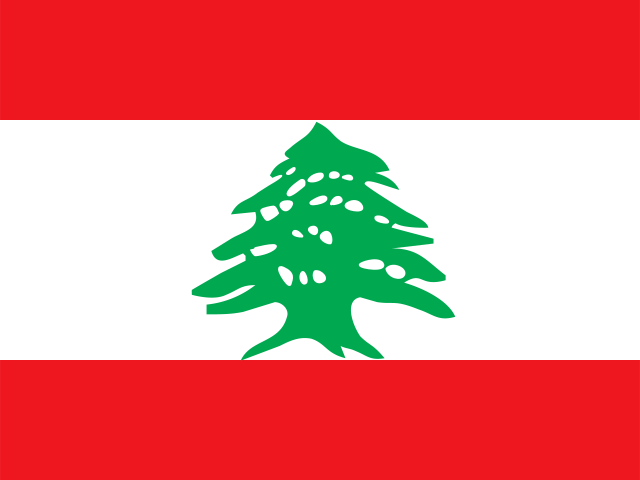 Lebanon
 Syria
 Palestine
 Egypt
 Sudan
 Yemen
 Morocco
 Algeria
 Tunisia
 Libya
 Mauritania
 Somalia
 Djibouti
 Comoros
How is income tax on salary worked out in Palestine inside the Green Line?
Tax on employment income is progressive. In 2026 the monthly bands are: 10% on the first 7,010 shekels, then 14% up to 10,060, then 20% up to 19,000, then 31% up to 25,100, then 35% up to 46,690, and 47% above that. Anyone with taxable income above 721,560 shekels a year pays an extra 3% on the excess.
Once the tax has been worked out on the bands, your credit points are subtracted from it, then a 35% credit on your pension fund contribution, then the qualifying town credit if you live in one. Credits reduce tax shekel for shekel, but they are not paid out in cash if they are larger than the tax.
Example: a salary of 12,000 shekels a month. The tax on the bands is 1,516 shekels a month. Subtract the credit points of 544.50 and the pension credit of about 237.65, and about 733.85 shekels a month is left, or 6.1% of salary.
What are credit points, and how much is a point worth in 2026?
A credit point (nekudat zikui) is a fixed amount taken off your monthly tax. In 2026 it is worth 242 shekels a month, or 2,904 shekels a year, the same as since 2024 because index-linking is frozen until 2027.
Every resident gets 2.25 points (two points for residency and a quarter point for travel), worth 544.50 shekels a month. A woman gets an extra half point, for a total of 2.75 points, worth 665.50 shekels. That is why someone earning about 5,445 shekels a month or less pays almost no income tax.
There are other points that the calculator does not include: for children, for holders of academic and professional qualifications for a period after graduating, for single parents and for people with disabilities. You claim these points by filling in Form 101 with your employer at the start of each year, and if you forget, you can claim them back later.
How much do national insurance and health tax take from your salary?
The National Insurance Institute (Bituach Leumi) collects two contributions from resident employees: national insurance at 1.04% on the part of salary up to 7,703 shekels a month and 7% above that, and health tax at 3.23% up to 7,703 and 5.17% above that. Together that is 4.27% on the first part and 12.17% on the rest, up to a maximum taxable income of 51,910 shekels a month in 2026.
The employer pays a further 4.51% up to 7,703 shekels and 7.6% above that. On a salary of 12,000 shekels, about 381 shekels is deducted for national insurance and about 471 shekels for health tax.
These rates are set by a temporary order in force until the end of 2026, which may be extended by two years. From 2026 the reduced-rate threshold is a fixed amount (7,522 shekels, updated by the price index) instead of 60% of the average wage.
What is new in salary tax for 2026?
The main change is that two bands were widened by the Economic Efficiency Law published on 31 March 2026 and applied retroactively from 1 January. The 20% band now runs up to 19,000 shekels a month instead of 16,150, and the 31% band up to 25,100 instead of 22,440. Someone earning 25,100 shekels or more saves up to about 420 shekels a month.
On the other hand, the lower bands and the value of a credit point stay frozen, with no inflation linking, for 2025 to 2027 under a law published in December 2024. This gradually increases the real tax burden on people on low and middle incomes.
The maximum income subject to national insurance rose to 51,910 shekels a month, the reduced-rate threshold to 7,703 shekels, and the minimum wage to 6,443.85 shekels a month from April 2026.
Do residents of Arab towns get an income tax reduction?
Yes, many of them do. Article 11 of the Income Tax Ordinance gives anyone who lived for the whole year in a "qualifying town" a tax credit worth a percentage of their employment income, up to an annual cap. A town gets on the list based on its distance from the centre of the country and its socio-economic position, and the list is updated every year.
Examples from the 2026 list: Sakhnin, Tamra, Kabul, Abu Snan and Judeidi-Makr 12% up to 186,000 shekels a year; Arraba, Maghar, Nahf, Yarka, Ein al-Asad and Fassuta 12% up to 213,240; Akka 12% up to 226,560; Beit Jann, Kisra-Sumei, Hurfeish and al-Buqei'a 14% up to 259,920; Rahat 16% up to 226,560; Tel as-Sabi, al-Lakiya, Hura, Ar'arat an-Naqab and Shaqib al-Salam 18% up to 259,920; and Kafr Yasif, al-Rama and Julis 7% up to 146,640.
Example: an employee from Sakhnin earning 12,000 shekels a month gets a credit of 12% × 144,000 = 17,280 shekels a year. That is more than their tax after credit points, so they pay no income tax. You claim the credit with a certificate of residence from the local authority attached to Form 101, and if you did not get it, you can claim it back for previous years.
How do I claim back overpaid income tax (hechzer mas)?
Many employees pay more tax than they need to without knowing it, because monthly withholding assumes you work the whole year for one employer. This usually happens when you work for part of the year, change jobs, or work for more than one employer without "tax coordination", or when you have not claimed points for children and academic qualifications, or the qualifying town credit.
You are also entitled to a 35% credit on donations to recognised organisations, and a credit on some insurance premiums. To claim, you submit an annual report (Form 135) to the tax authority, online or at an assessment office, together with Form 106, which your employer gives you at the end of the year.
The law lets you file the report for the last six years (Article 160), so in 2026 you can claim back overpayments for 2020 to 2025. The money is returned with indexation and interest.
Compulsory pension and severance pay: what are your rights?
Every employee is covered by the extension order for comprehensive pension. After 6 months of work (or 3 months, applied retroactively, for someone with an existing fund), the employer deducts 6% of your salary and adds 6.5% for the pension and 6% for the severance component, on pay up to the average wage in the economy (13,769 shekels a month in 2026). Your contribution is not a tax but savings in your name, and you get a 35% tax credit on it.
Statutory severance pay (pitzuei piturim) is one month's salary for each year of work, based on your last salary, for anyone who has worked at least one continuous year and is dismissed. Resigning normally does not give you severance, but the law treats some resignations as dismissal, such as resigning for health reasons, to care for a newborn within 9 months, or because of a significant worsening in conditions.
If your contract applies Section 14 of the law, what the employer has paid into the severance component replaces severance pay to the extent agreed, and it is released to you even if you resign. Severance pay is tax free up to 13,750 shekels for each year of work in 2026.
What about workers coming from the West Bank?
The calculator is designed for resident employees. Different rules apply to a worker who lives in the West Bank and works inside the Green Line. Under the National Insurance Institute's 2026 circular, only 0.07% is deducted from their pay up to 7,703 shekels and 0.61% above that, and the employer pays 0.71% and then 2.49%. These rates are much lower than for residents because their insurance cover is narrower.
The basic credit points (2.25 points) are also reserved by law for residents. We have not checked with an official source how income tax is worked out for this group, so we do not calculate it here. To work out a salary in the Palestinian Authority areas, use the Palestine calculator.
What is the VAT rate, and what other taxes are there?
Value added tax (ma'am) has been 18% since 1 January 2025, up from 17%, with a zero rate on exports and certain transactions. Corporate tax is 23%.
Dividends and capital gains are usually taxed at 25% (30% for a substantial shareholder), and there is no inheritance tax. Local authorities collect arnona, a tax on homes based on size and area.
What changed in 2026?
- The 20% band was widened to 228,000 shekels a year (19,000 a month) from 193,800, and the 31% band to 301,200 (25,100 a month) from 269,280, from 1 January 2026, by amending Article 121 of the Income Tax Ordinance in the Economic Efficiency Law of 2026 published on 31 March 2026.
- The freeze on inflation linking of the other bands and of the credit point value (242 shekels a month) continues for 2025 to 2027, under the Economic Efficiency Law (freezing tax and surtax updates) published on 26 December 2024.
- The maximum income subject to national insurance rose to 51,910 shekels a month and the reduced-rate threshold to 7,703 shekels from 1 January 2026, and the reduced-rate threshold became a fixed amount linked to the price index instead of 60% of the average wage.
- The minimum wage rose to 6,443.85 shekels a month from April 2026, from 6,247.67.
- The income tax exemption on a qualifying pension rose to 57.5% in 2026 from 57% in 2025, under Amendment 275 to the Income Tax Ordinance.
- 6 new towns were added to the list of qualifying towns that get an income tax reduction for 2026.
For expats
Tax residency is based on your centre of life: your home, family, work and economic interests. Your centre of life is presumed to be here if you stay 183 days in the year, or 30 days with a total of 425 days over the current and previous two years, and this presumption can be rebutted. Residents are taxed on their income from here and from abroad, so someone from inside the Green Line who works in the Gulf or Europe but whose centre of life stays here may be asked to pay tax on that foreign income, with a possible credit for tax paid abroad under the Ordinance and tax treaties. A non-resident who works here does not get the residency points, and pays national insurance at reduced rates (0.10% then 0.87% in 2026). That is why it helps to document the move of your centre of life when you go abroad to work.
Income tax rates
| Annual taxable income (ILS) | Rate |
|---|---|
| 0 to 84,120 | 10% |
| 84,120 to 120,720 | 14% |
| 120,720 to 228,000 | 20% |
| 228,000 to 301,200 | 31% |
| 301,200 to 560,280 | 35% |
| Over 560,280 | 47% |
The brackets are annual and apply to employment income for 2026, after the 20% and 31% bands were widened by the Economic Efficiency Law 2026. From the resulting tax, the following are deducted: tax credit points (2.25 points for a resident and 2.75 for a woman, each point worth 242 shekels a month), a 35% credit on the pension contribution, and the qualifying town credit if any. A 3% surtax is added on taxable income above 721,560 shekels a year.
Other taxes that matter in Palestine (inside the Green Line)
Capital gains
A resident individual pays 25% on the real capital gain from selling listed and unlisted shares, and 30% if they are a substantial shareholder (10% or more) at the time of sale or in the 12 months before it (Article 91 of the Income Tax Ordinance). An extra 3% surtax applies to taxable income above 721,560 shekels a year, and since 2025 a further 2% on income from capital sources above the same amount. Gains on selling property are subject to betterment tax (mas shevach) at 25% of the real gain for property bought since 2012, according to the PwC summary, with exemptions for selling a residential flat under conditions we have not set out here.
Dividends
Dividends received by an individual are taxed at 25%, or 30% for a substantial shareholder in the paying company (Article 125b), and are usually withheld at source at the same rate. The 3% surtax plus 2% on capital income above 721,560 shekels a year also applies.
Crypto
The tax authority treats cryptocurrencies as an asset, not a currency, so selling or exchanging them is a taxable event for capital gains tax (usually 25% for an individual). If the activity reaches the level of a business, the gain is treated as business income at the normal bands, under income tax circular No. 05/2018.
Inheritance
There is no inheritance or estate tax, and no specific gift tax, according to the PwC summary. Selling an inherited property later may be subject to betterment tax under the general rules.
Property and wealth
There is no wealth tax. Local authorities collect an annual property tax (arnona) from the occupier of a home or business premises, based on size, area and type of use, and charge it to the owner if the property is empty.
Tax residency
A resident is someone whose centre of life is here, judged by their permanent home, where their family lives, where they work, their economic interests and their social activity. They are presumed resident if they stay 183 days or more in the tax year, or 30 days or more with a total of 425 days over the current and previous two years, and either the person or the assessing officer can rebut this presumption (Article 1 of the Income Tax Ordinance). A resident is taxed on income from here and from abroad, and a non-resident only on income earned here (Article 2). A tax residency certificate for double tax treaty purposes is requested from the tax authority. We have not checked the application steps and documents against an available official source.
Retirement and pensions
A pension from a pension fund is subject to income tax, but part of a "qualifying pension" is exempt: the exemption is 57.5% in 2026 (after 57% in 2025) and rises to 62.5% in 2027 and 67% from 2028, of a qualifying pension cap of 9,430 shekels a month, which means an exemption of up to 5,422 shekels a month. The retirement age is 67 for men, and for women it rises gradually to 65 for those born in 1970 or later. There is no special retirement visa for foreigners, and we have not checked in detail how foreign pensions are treated.
Cost to the employer
The employer pays national insurance at 4.51% on the part of salary up to 7,703 shekels a month and 7.6% above that up to 51,910 shekels, and pays 6.5% for pension and 6% for the severance component into the employee's pension fund on pay up to the average wage of 13,769 shekels a month. The total is 20.1% on the higher part of salary and 17.01% on the first part. Health tax is paid by the employee alone.
Social insurance
| Contribution | Employee | Employer | Applies to | Cap |
|---|---|---|---|---|
| National insurance | 7% | 7.6% | Resident employees from age 18 to retirement age | 1.04% on the employee and 4.51% on the employer up to 7,703 shekels a month, then 7% and 7.6% up to the maximum of 51,910 shekels a month (2026) |
| Health tax (collected by the National Insurance Institute) | 5.2% | 0% | Resident employees; paid by the employee only | 3.23% up to 7,703 shekels a month and 5.17% above that up to 51,910 shekels |
| Mandatory pension (savings in a fund in the employee's name) | 6% | 12.5% | Every employee after a 6-month waiting period | On salary up to the average wage in the economy, 13,769 shekels a month. The employer share is 6.5% pension and 6% severance component |
Work out your own pay in Palestine (inside the Green Line)
Instant result, monthly and yearly, with every deduction itemised.
Common questions about taxes in Palestine (inside the Green Line)
How much is income tax inside the Green Line in 2026?
The monthly bands in 2026 are 10% up to 7,010 shekels, 14% up to 10,060, 20% up to 19,000, 31% up to 25,100, 35% up to 46,690, and 47% above that, plus an extra 3% above 60,130 shekels a month. Credit points are then subtracted, so a salary of 10,000 shekels pays only about 365 shekels in income tax.
What are credit points, and how much is a point worth in 2026?
A credit point takes 242 shekels off your tax every month in 2026. A resident man gets 2.25 points (544.50 shekels) and a woman 2.75 points (665.50 shekels), and there are extra points for children and academic qualifications, claimed on Form 101.
How much does national insurance take from your salary?
National insurance and health tax are deducted together at 4.27% on the first 7,703 shekels of monthly salary, and 12.17% on the rest up to 51,910 shekels. On a salary of 10,000 shekels the total is about 608 shekels a month.
What is the net pay on a 10,000 shekel salary inside the Green Line?
For a single resident man paying into a pension: income tax of about 365 shekels, national insurance and health tax of about 608, and pension of 600, leaving net pay of about 8,426 shekels a month. A woman gets about 121 shekels more because of the extra half credit point.
How do I claim back income tax (hechzer mas)?
You submit an annual report (Form 135) to the tax authority together with Form 106 from your employer, and you can do this for the last 6 years. The most common cases are working for part of the year, working for more than one employer, or not claiming points for children and qualifications or the qualifying town credit.
Do residents of Sakhnin, Rahat or Tel as-Sabi get a tax reduction?
Yes, on the 2026 list: Sakhnin 12% of income up to 186,000 shekels a year, Rahat 16% up to 226,560, and Tel as-Sabi 18% up to 259,920. Your centre of life must be in the town for the whole year, and you give your employer a certificate of residence from the local authority.
What percentage of salary goes to the compulsory pension (pensia)?
The employer deducts 6% of your salary and adds 6.5% for the pension and 6% for severance, 18.5% in total, on pay up to the average wage of 13,769 shekels a month. This starts after 6 months of work, and you get a 35% tax credit on your contribution.
How is severance pay (pitzuim) worked out?
One month's salary for each year of work, based on your last salary, for anyone who has worked at least one continuous year and is dismissed, or resigns in circumstances the law treats as dismissal. If your contract applies Section 14, the severance component in your pension fund is released to you instead.
What is the minimum wage in 2026?
6,443.85 shekels a month for an adult in a full-time job from April 2026. It was 6,247.67 shekels until March 2026, according to the National Insurance Institute circular.
What is the VAT rate inside the Green Line?
18% since 1 January 2025, up from 17%. This is the rate in force in 2026, with a zero rate on exports and certain transactions.
Sources
- Tax authority: guide to calculating income tax on salaries for 2026, updated April 2026 (brackets after the widening, the surtax, credit point value of 242, qualifying income ceiling of 9,700, average wage of 13,769, the list of qualifying towns and their rates, severance pay exemption of 13,750) Official source · checked 2 October 2026
- Income Tax Ordinance, consolidated text (sections 1, 11, 34, 36, 36A, 45A, 91, 121B, 125B, 126 and 160), Nevo legal database Secondary source used to cross-check · checked 2 October 2026
- National Insurance Institute: contribution rates for employees (reduced-rate ceiling of 7,703 and maximum of 51,910 from 1/1/2026) Official source · checked 2 October 2026
- National Insurance Institute: employers circular No. 1522 of 1/4/2026 (split of rates between employee and employer, average wage, minimum wage) Official source · checked 2 October 2026
- Extension order for comprehensive pension insurance, consolidated text 2011 (insured wage up to the average wage, 6-month waiting period) Official source · checked 2 October 2026
- National Insurance Institute, study "The Mandatory Pension Law" 2023: 6% from the employee, and 6.5% pension and 6% severance from the employer Official source · checked 2 October 2026
- Severance Pay Law 1963, consolidated text (sections 1, 6 to 11, 12 and 14), published on the National Insurance Institute website Official source · checked 2 October 2026
- Tax authority: explanatory guidance on raising VAT to 18% from 1/1/2025 Official source · checked 2 October 2026
- Official representative rate of the US dollar, 3.06 shekels on 2/10/2026 (the central bank that issues the shekel) Official source · checked 2 October 2026
- PwC Worldwide Tax Summaries: other taxes and national insurance contributions (secondary source used to cross-check) Secondary source used to cross-check · checked 2 October 2026