 Saudi Arabia
 United Arab Emirates
 Qatar
 Kuwait
 Oman
 Bahrain
 Jordan
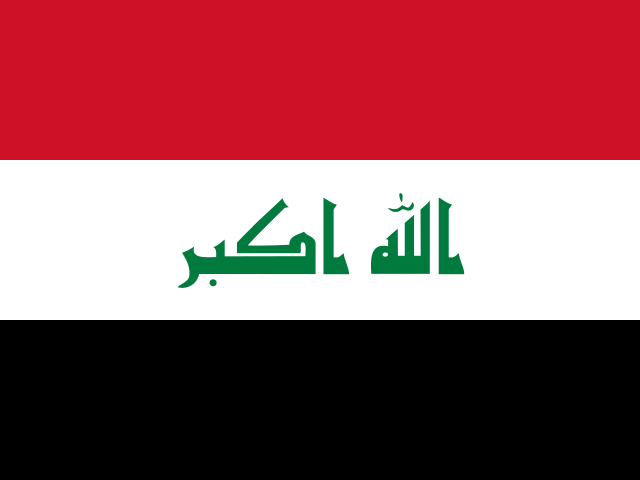 Iraq
 Lebanon
 Syria
 Palestine
 Egypt
 Sudan
 Yemen
 Morocco
 Algeria
 Tunisia
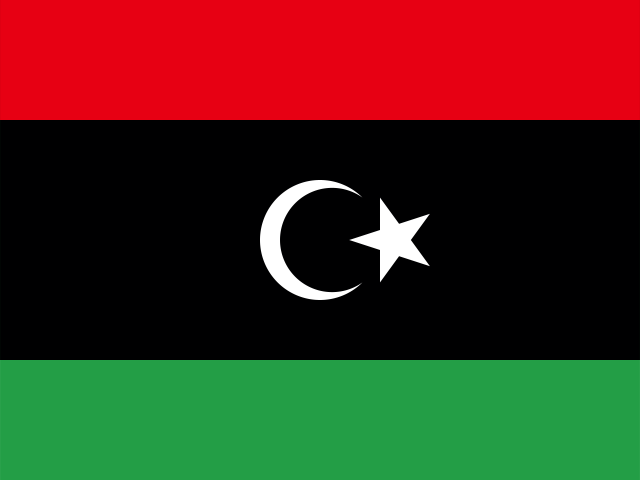 Libya
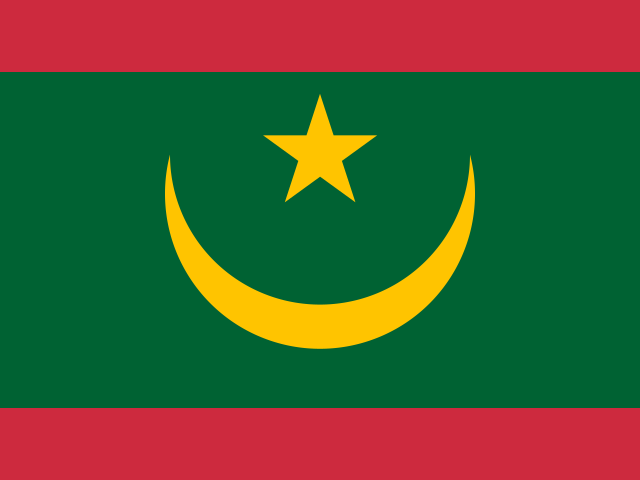 Mauritania
 Somalia
 Djibouti
 Comoros
How is income tax on salary worked out in Jordan?
Start with your gross annual salary and subtract the personal exemption of 9,000 dinars. If you support a spouse or children, a further exemption of 9,000 dinars applies, however many dependants you have. What is left is your taxable income.
The bands in Article 11 of Income Tax Law No. 34 of 2014, as amended by Law No. 38 of 2018, then apply to that income: 5% on the first 5,000 dinars, 10% on the next 5,000, then 15%, then 20%, then 25% on income above that up to 1 million dinars, and 30% on anything over 1 million.
Example: a salary of 2,500 dinars a month is 30,000 dinars a year. After the 9,000 exemption, 21,000 dinars is taxable, and the tax on it is 2,750 dinars a year. That is about 229 dinars a month, or only 9.2% of gross salary.
How much social security comes off your salary?
Your employer deducts 7.5% of your monthly pay: 6.5% for old age, disability and death insurance and 1% for unemployment insurance. The employer also pays a further 14.25% on top: 11% for old age, 2% for work injuries, 0.75% for maternity and 0.5% for unemployment.
Contributions are charged on pay up to a ceiling linked to inflation. The Social Security Corporation announced a 2026 ceiling of 3,733 dinars a month, up from 3,668 in 2025. Someone earning 5,000 dinars pays contributions on 3,733 only, which is about 280 dinars.
Note that employees cannot deduct social security contributions from income for income tax. Tax is worked out on gross salary after the exemptions.
What is new in Jordan's salary tax for 2026?
Neither the income tax bands nor the personal exemption changed in 2026. They have stayed the same since the 2018 amendments took full effect in 2020, when the personal exemption fell from 10,000 to 9,000 dinars.
The real change for 2026 is a higher ceiling on pay subject to social security, now 3,733 dinars a month, because the ceiling is linked to inflation, which was 1.77% in 2025. This only affects people on high salaries.
In February 2026 the Legislation and Opinion Bureau published a draft law amending the Social Security Law. It would raise the retirement age gradually from 2028 and does not change contribution rates. The draft was not in force when this page was updated.
Who counts as tax resident, and do Jordanians abroad pay tax on salaries earned there?
The 9,000 dinar personal exemption is for resident individuals. Income from a job done in Jordan is taxed in Jordan whatever the employee's nationality.
A Jordanian who works in the Gulf and is paid there does not pay Jordanian tax on that salary, because it is income earned outside the Kingdom from work done abroad. The law also lets a non-resident Jordanian claim the dependants' exemption if they support a family living in Jordan, which matters for anyone with taxable income inside the country.
When do you file a tax return in Jordan?
Anyone with taxable income must file an annual return by the end of the fourth month after the year ends, so by 30 April 2027 for 2026 income, and must pay any tax still due by the same date.
Your employer deducts tax from your salary every month. However, on 22 April 2026 the Income and Sales Tax Department said that employees earning more than 9,000 dinars a year (or 18,000 dinars with dependants) must file a return even though tax is deducted monthly. The details are in the Jordan tax return guide. If you have more than one source of income, or want to claim the exemptions for medical, education and rent costs, you file through the department's online services.
Do employees get an end-of-service gratuity in Jordan?
Article 32 of the Labour Law says a worker who is not covered by social security is entitled, when their employment ends for any reason, to a gratuity of one month's pay for each year of actual service, based on their last wage, with a pro rata amount for part years.
Most private sector employees are covered by social security, however, and they do not get this gratuity from their employer. Their rights when they leave work come from the Social Security Corporation instead: a retirement pension once they meet the conditions, or a lump-sum payment, plus unemployment benefit, which is capped at 623 dinars in 2026.
For tax, the first 15,000 dinars of an end-of-service gratuity for service since 2015 is exempt, and anything above that is taxed at 9%.
What about the self-employed and freelancers?
Business income is taxed at the same bands after allowable expenses and personal exemptions are deducted. The business owner files their own annual return and may have to make advance payments of tax.
Self-employed people can join social security voluntarily. They then pay both shares together, at 17.5%, for old age, disability and death insurance.
Practical tips to lower your tax legally
Keep your receipts for medical, education and rent costs and for mortgage interest. They give you an exemption of 1,000 dinars for yourself, 1,000 for your spouse and 1,000 for each child, up to 3,000 dinars, within the overall exemption cap of 23,000 dinars.
If both spouses work, they can file a joint return if both agree, and the overall cap of 23,000 dinars still applies. Donations to government bodies are deductible, and so are donations approved by the Council of Ministers, up to 25% of taxable income.
What changed in 2026?
- The ceiling on pay subject to social security contributions rose to 3,733 dinars a month for 2026, from 3,668 dinars, under Article 20 of Social Security Law No. 1 of 2014, which links it to inflation.
- The cap on unemployment benefit rose to 623 dinars for 2026, from 612 dinars, using the same mechanism.
For expats
Jordanians are one of the largest groups of foreign workers in the Gulf. Their salaries there are not subject to Jordanian income tax, because the income comes from work done outside the Kingdom, and most Gulf states do not tax individual salaries either. Anyone who moves back to work in Jordan pays the normal bands with the 9,000 dinar exemption, and someone abroad who supports a family living in Jordan can claim the dependants' exemption against any taxable income in Jordan. Social security lets Jordanians working abroad contribute voluntarily to keep their pension rights. According to the Central Bank of Jordan, workers' remittances into the country rose to 3.0 billion US dollars in the first seven months of 2026.
Income tax rates
| Annual taxable income (JOD) | Rate |
|---|---|
| 0 to 5,000 | 5% |
| 5,000 to 10,000 | 10% |
| 10,000 to 15,000 | 15% |
| 15,000 to 20,000 | 20% |
| 20,000 to 1,000,000 | 25% |
| Over 1,000,000 | 30% |
The brackets apply to taxable income after the personal exemption (9,000 dinars) and any other exemptions are deducted. A national contribution of 1% is added on taxable income above 200,000 dinars.
Other taxes that matter in Jordan
Capital gains
Article 4 of Income Tax Law No. 34 of 2014, as amended, exempts capital gains made inside the Kingdom, including gains on the sale of listed and unlisted shares and of property. The exceptions are gains on depreciable assets and gains made by a legal entity on selling shares in a company. Selling property does carry fees paid at the Department of Lands and Survey: amending Law No. 7 of 2023 cut the sale fee from 5% to 3%, as reported by Al Mamlaka TV, some secondary sources mention a 4% property sale tax on the seller, and the PwC summary puts the total at about 6%. We could not reach the department's official website to confirm the current rates.
Dividends
Dividends and profit shares paid by companies resident in Jordan are tax free for individual shareholders under Article 4/a/8. The exemption does not cover dividends received by banks, insurance companies, financial brokers and the other bodies the article lists. Interest on bank deposits has 5% withheld for individuals as a final tax under Article 12.
Crypto
Law No. 14 of 2025 regulating dealings in virtual assets takes effect 90 days after publication in the Official Gazette. It bans providing virtual asset services to others in the Kingdom without a licence from the Jordan Securities Commission, and bans using virtual assets for payment unless the Central Bank decides otherwise. The Income Tax Law has no specific provision on individuals' gains from cryptocurrency, and we found no official guidance on how they are taxed.
Inheritance
Jordan has no inheritance or gift tax, and Article 4/a/12 of the Income Tax Law exempts what heirs and legatees receive when an estate is distributed. For Muslims, estates are divided under the Islamic inheritance rules in the Personal Status Law.
Property and wealth
There is no wealth tax. Municipalities charge an annual tax on buildings and land within their boundaries, worked out for buildings on the annual rental value. We could not confirm the current rates from an official source.
Tax residency
A resident individual is someone who is physically present in the Kingdom for at least 183 days in the tax year, in one stretch or in total. Jordanian employees of the government or official public bodies, inside or outside the Kingdom, are also resident. Income arising in the Kingdom is taxable for anyone. A resident's income from abroad is taxed, at only 10%, if it arises from funds or deposits from the Kingdom. A tax residency certificate for double tax treaty purposes is issued by the Income and Sales Tax Department. We could not reach the official service page to check the procedure and documents.
Retirement and pensions
The first 2,500 dinars of a monthly pension is exempt from income tax under Article 4/a/14, and income from abroad is only taxed if it arises from funds or deposits from the Kingdom. We found no specific retirement visa. However, a Council of Ministers decision in July 2026 grants 5-year renewable residency to anyone who buys property worth 200,000 dinars from a developer, 300,000 dinars from other sellers, or 150,000 dinars outside the Amman governorate, and keeps it for 5 years without selling or mortgaging it.
Cost to the employer
The employer pays 14.25% of pay to the Social Security Corporation (old age, disability and death 11%, work injuries 2%, maternity 0.75%, unemployment 0.5%) and the employee pays 7.5%, a total of 21.75%. The ceiling on pay subject to contributions is 3,733 dinars a month for 2026 and is adjusted each year for inflation.
Social insurance
| Contribution | Employee | Employer | Applies to | Cap |
|---|---|---|---|---|
| Social security (old age, disability and death, and unemployment) | 7.5% | 14.3% | Private sector workers covered by the Social Security Law | The insurable wage cap is 3,733 dinars a month for 2026 |
Work out your own pay in Jordan
Instant result, monthly and yearly, with every deduction itemised.
Common questions about taxes in Jordan
How much income tax is paid on a salary in Jordan in 2026?
After a 9,000 dinar annual exemption, tax is 5% on the first 5,000 dinars, then 10%, 15% and 20% on each following 5,000, then 25% up to 1 million dinars and 30% above that. A salary of 1,000 dinars a month pays about 150 dinars in tax for the whole year.
What salary is tax free in Jordan?
A single resident pays no tax if their annual income is 9,000 dinars or less, which is 750 dinars a month. For someone supporting a family the tax-free amount rises to 18,000 dinars a year (1,500 dinars a month), and more if they submit receipts for allowable expenses.
What percentage of salary goes to social security in Jordan?
7.5% of monthly pay, up to a ceiling of 3,733 dinars in 2026, so the most deducted in a month is about 280 dinars. The employer pays a further 14.25% on the same pay.
What is the net pay on a 500 dinar salary in Jordan?
A salary of 500 dinars a month (6,000 a year) is below the personal exemption, so no tax is due. Only social security of 7.5%, or 37.50 dinars, is deducted, leaving net pay of 462.50 dinars.
Is social security deducted before tax is worked out in Jordan?
No. The Income Tax Law does not let employees deduct their social security contributions from taxable income. Tax is worked out on gross salary after the personal exemptions, and social security is deducted separately.
What is the national contribution in Jordanian income tax?
It is an extra 1% on the part of an individual's taxable income above 200,000 dinars a year, paid into an account set aside for paying off public debt. It does not affect people on ordinary salaries.
What is the deadline for filing an income tax return in Jordan?
The end of the fourth month after the year ends, so 30 April 2027 for 2026 income. Employees earning more than 9,000 dinars a year (18,000 with dependants) must file a return even though tax is deducted monthly, according to a statement from the Income and Sales Tax Department on 22 April 2026.
Does a Jordanian working in Saudi Arabia or the UAE pay tax in Jordan?
Salaries earned from work done outside Jordan are not subject to Jordanian income tax. Jordanian tax applies to income earned in, or arising from, the Kingdom.
How do I work out end-of-service pay in Jordan?
If you are not covered by social security, you get one month's pay for each year of service, based on your last wage, under Article 32 of the Labour Law. If you are covered by social security, as most people are, you get your entitlements from the Social Security Corporation instead.
What is the sales tax rate in Jordan?
The standard rate of general sales tax is 16%, with a zero rate on exports, exemptions for some basic goods, and a special tax on goods such as tobacco and fuel.
Sources
- Income Tax Law No. 34 of 2014 as amended by Amending Law No. 38 of 2018 (Articles 4, 9, 11 and 17), Jordan Open Government Data portal Official source · checked 2 October 2026
- Social Security Law No. 1 of 2014 and its amendments (Articles 20, 24, 42, 48 and 59) Official source · checked 2 October 2026
- Jordan News Agency (Petra), citing the Social Security Corporation: wage cap of 3,733 dinars for 2026 Official source · checked 2 October 2026
- Labour Law No. 8 of 1996 and its amendments (Article 32), Jordan Open Government Data portal Official source · checked 2 October 2026
- Central Bank of Jordan: foreign exchange rates (the US dollar at 708 to 710 fils) Official source · checked 2 October 2026
- PwC Worldwide Tax Summaries: Jordan, other taxes (secondary source used to confirm the 16% sales tax rate) Secondary source used to cross-check · checked 2 October 2026