 Saudi Arabia
 United Arab Emirates
 Qatar
 Kuwait
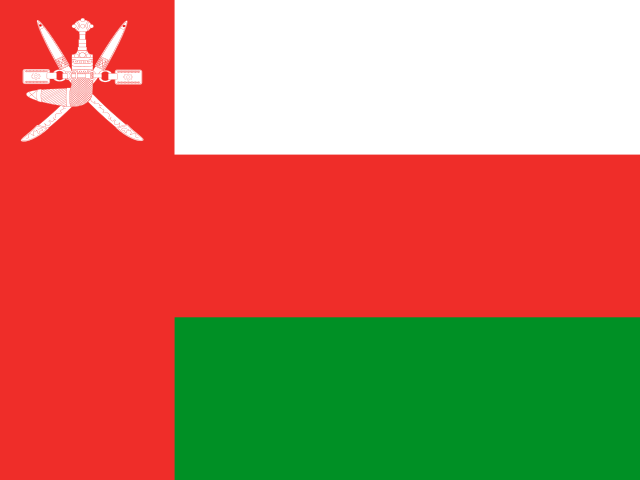 Oman
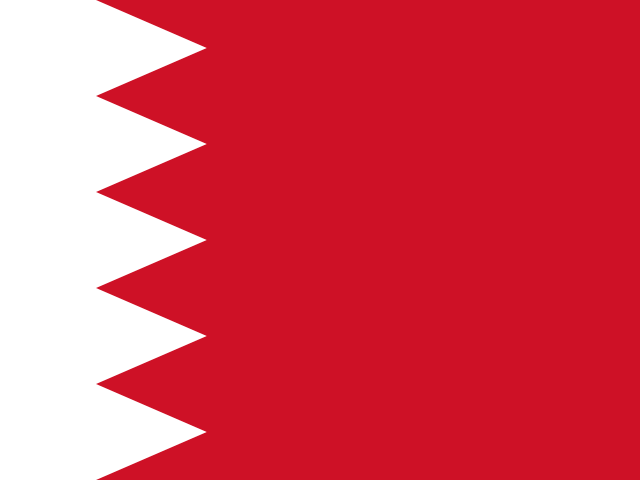 Bahrain
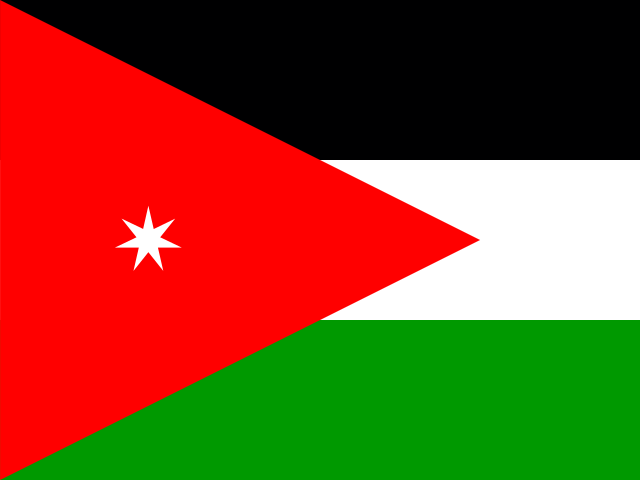 Jordan
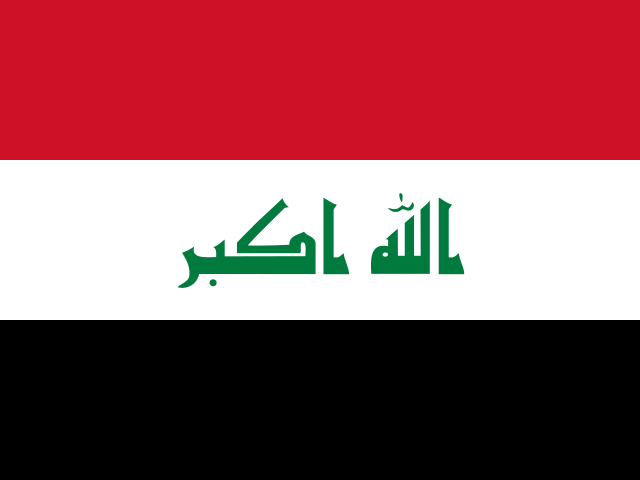 Iraq
 Lebanon
 Syria
 Palestine
 Egypt
 Sudan
 Yemen
 Morocco
 Algeria
 Tunisia
 Libya
 Mauritania
 Somalia
 Djibouti
 Comoros
Mauritania vs Qatar: salary after tax compared
What you keep of the same gross salary at home in Mauritania and in a job in Qatar, under the official 2026 rules of each country.
On a gross salary of $3,000 a month, an employee in Mauritania keeps about $1,959 (34.7% deducted), against about $3,000 for an expat in Qatar (0% deducted). Mauritania: income tax 15% to 40% after an exemption of 6,000 ouguiyas a month. Qatar: no income tax on salaries.
The figures for Mauritania are estimates: official sources are limited. Treat small differences with care. Verification levels.
Monthly take-home pay at 6 salary levels
Each gross salary is converted into local currency at a fixed exchange rate and run through each country's 2026 rules. Take-home pay is shown in US dollars, with the local amount under it. Mauritania is for an employee there; Qatar is for a single expat employee.
| Gross a month (USD) | Mauritania take-home | Qatar take-home | Difference a month |
|---|---|---|---|
| $1,000 | $759 30,360 MRU | $1,000 3,640 QAR | $241 more in Qatar |
| $2,000 | $1,359 54,360 MRU | $2,000 7,281 QAR | $641 more in Qatar |
| $3,000 | $1,959 78,360 MRU | $3,000 10,921 QAR | $1,041 more in Qatar |
| $5,000 | $3,159 126,360 MRU | $5,000 18,202 QAR | $1,841 more in Qatar |
| $8,000 | $4,959 198,360 MRU | $8,000 29,123 QAR | $3,041 more in Qatar |
| $12,000 | $7,359 294,360 MRU | $12,000 43,684 QAR | $4,641 more in Qatar |
Exchange rates: 1 MRU = 0.025 USD (2 October 2026), 1 QAR = 0.2747 USD (2 October 2026).
Which leaves you more?
Qatar leaves you more at every salary level we compared. On $3,000 a month gross, the difference is about $1,041 a month ($12,492 a year) in favour of Qatar.
The Gulf figures are for an expat. Qatar treats nationals differently: they pay pension contributions that expats do not. Switch to national in the calculator to see their figures.
Deductions on $3,000 a month, line by line
Every deduction from the same gross salary in each country, in local currency, with the calculator's notes.
- The calculation does not include the compulsory health insurance (CNAM) contribution because we could not confirm its rate from an official text, so your actual net pay may be lower.
- Exempt allowances are not counted (such as family allowances, or allowances up to 1,000 ouguiyas a month other than housing and transport).
- There is no income tax on salaries in Qatar, and no VAT is in force.
- Expat employees are not covered by the Qatari social insurance law. Instead they are entitled to an end-of-service gratuity under the Labour Law.
Income tax and social insurance side by side
| Item | Mauritania | Qatar |
|---|---|---|
| Income tax on salaries | 15% to 40% after an exemption of 6,000 ouguiyas a month | None |
| Top income tax rate | 40% | 0% |
| Employee social insurance | 1% social security up to 15,000 ouguiyas a month, plus the CNAM health insurance contribution (rate not confirmed) | Expats 0%, Qatari nationals 7%, capped at 100,000 Qatari riyals a month |
| Employer contributions on $3,000 | 1.9% | 0% |
| VAT (standard rate) | 16% | None |
| Corporate tax | 25% | 10% |
| End-of-service gratuity | No general scheme | Set by the labour law |
| Currency | Mauritanian ouguiya (MRU) | Qatari riyal (QAR) |
| Tax authority | Direction Générale des Impôts | General Tax Authority (GTA) |
| Double tax treaty between them | Signed, not yet in force (2003) | |
Where the numbers shift
- Turning point
- The better choice does not change between $500 and $30,000 a month
- Taken from your next raise (on $3,000)
- Mauritania 40% · Qatar 0%
- Marginal rate on $10,000
- Mauritania 40% · Qatar 0%
- Tax freedom day ($3,000)
- Mauritania 8 May · Qatar 1 January
- Take-home after VAT on spending
- Mauritania $1,689 · Qatar $3,000
- Employer cost on top of salary
- Mauritania 1.9% · Qatar 0%
Take-home after VAT = take-home pay ÷ (1 + the standard VAT rate): what the salary is worth if all of it is spent on goods at the standard rate. Tax freedom day: the day of the year on which you stop working to pay tax and contributions.
End-of-service gratuity
Qatar requires employers to pay a lump sum when the contract ends. Mauritania has no general scheme. Amounts below are for $3,000 a month, with basic pay at 70% of gross and the contract ended by the employer.
| Years of service | Qatar |
|---|---|
| 2 years | $2,940 10,703 QAR |
| 5 years | $7,350 26,756 QAR |
| 10 years | $14,700 53,513 QAR |
Resigning can reduce the amount in some countries. The end-of-service calculators apply each country's full rules.
Beyond salary: investments, family and residence
| Item | Mauritania | Qatar |
|---|---|---|
| Gains on shares (top rate) | 10% | 10% |
| Gains on property (top rate) | 10% | 0% |
| Dividends | 10% | 0% |
| Crypto gains | Not settled | Banned |
| Inheritance tax | No | No |
| Remote work visa | None | None |
Moving from Mauritania to Qatar: what changes
- On $3,000 a month you gain about $1,041 a month after the move ($12,492 a year), because the deduction rate falls from 34.7% to 0%.
- On $10,000 a month, each extra dollar of a raise loses 0% in Qatar instead of 40% in Mauritania, so pay rises are worth more after the move.
- VAT falls from 16% to 0%: spending $1,000 a month on standard-rated goods costs about $138 less each month.
- You gain a legal right to an end-of-service gratuity in Qatar (about $7,350 after 5 years on $3,000 a month), which no general scheme provides in Mauritania.
- Dividends: not taxed in Qatar, against 10% in Mauritania.
- Crypto gains: banned in Qatar; not settled in Mauritania.
- Tax residence in Qatar: The Income Tax Law defines a resident as someone who has a permanent home available in Qatar, or who stays there for more than 183 days, consecutive or not, in the year, or who holds Qatari nationality. You may also stay tax resident in Mauritania if you do not end your residence there. Count your days.
- Mauritania and Qatar have a double tax treaty (signed, not yet in force, 2003). It decides which country taxes income when both could. Check other treaties.
Mauritania vs Qatar: common questions
Which pays more after tax, Mauritania or Qatar?
Qatar leaves you more at every salary level we compared. On $3,000 a month gross, the difference is about $1,041 a month ($12,492 a year) in favour of Qatar.
How much is left of $3,000 a month in Mauritania and Qatar?
On a gross salary of $3,000 a month, an employee in Mauritania keeps about $1,959 (34.7% deducted), against about $3,000 for an expat in Qatar (0% deducted). Mauritania: income tax 15% to 40% after an exemption of 6,000 ouguiyas a month. Qatar: no income tax on salaries.
How much is left of $12,000 a month in each?
About $7,359 in Mauritania and $12,000 in Qatar. The gap grows with pay because the marginal rates at this salary differ (40% against 0%).
Do expats pay social insurance in Qatar?
Expats 0%, Qatari nationals 7%, capped at 100,000 Qatari riyals a month. On $3,000 a month an expat has 0% deducted in total.
Is VAT higher in Mauritania or Qatar?
VAT is 16% in Mauritania, and Qatar has none. VAT applies to most of what you buy, so it changes what a salary is worth even when take-home pay is the same.
Is there a double tax treaty between Mauritania and Qatar?
Yes. The treaty is signed, not yet in force (2003), according to the official treaty lists we checked on 9 October 2026.
Does the comparison include the cost of living?
No. It covers taxes and mandatory contributions only, at fixed, dated exchange rates. Rent, schooling and health care can change the result, so weigh them next to these figures.
Sources
Rates and bands come from each country's official sources. Mauritania last checked 2 October 2026, Qatar 2 October 2026.
- General Tax Code (Law 2019-018), 2020 edition published on the tax administration website: articles 110, 113 and 114 Mauritania · official source
- Finance Law for 2026 (Ministry of Economy and Finance): its tax provisions do not change the tax on salaries and wages Mauritania · official source
- Finance Law for 2025: its tax provisions do not change the tax on salaries and wages Mauritania · official source
- Law 2012-007 extending health insurance (CNAM) to the private sector: the contribution rate is set by decree Mauritania · official source
- Law No. (1) of 2022 issuing the Social Insurance Law, Official Gazette issue 7 of 3 July 2022 (Articles 1, 11, 12 and 13) Qatar · official source
- Labour Law No. (14) of 2004 (Articles 54, 56 and 61) Qatar · official source
- General Tax Authority: taxes information (income tax of 10% on business activities, no VAT in force) Qatar · official source
- General Tax Authority: global and domestic minimum tax of 15% (Law No. 22 of 2024) Qatar · official source
- Treaty list used for Mauritania checked 9 October 2026
Results are estimates for information only, not tax advice. How we calculate.
Related comparisons
Send it to someone who needs it
Share this page in a second, or add the site to your phone so it opens with one tap, like an app.
On iPhone: tap Share in the browser, then "Add to Home Screen".
Bookmark it: Ctrl + D
Follow us on InstagramFacebook